Enjoy art at Royal Djurgården this summer

art at Royal Djurgården this summer

Summer is here and at Djurgården there are several art exhibitions to enjoy. There is plenty to experience so whether you want to spend one or two days you can create your own art tour at Djurgården with some recommendations from us – som you can enjoy art at Royal Djurgården this summer.

Djurgården offers everything from Anders Petersens photography at Liljevalchs to magnificent paintings from the 20th century at the Thiel Gallery and Prince Eugen’s Waldemarsudde. And don’t miss all the beautiful monuments here at Djurgården!

Take a walk, or why no explore Djurgården on bike? There is much to see along the way as well. For example several monuments and memorials. The latest is Ripples, a memorial after the Tsunami catastrophe of 2004. Our proposition for a art tour at Djurgården is that you start at the Thiel Gallery which you’ll find furthest out on Djurgården and then start to head back towards the Djurgården Bridge. Along the way visit Waldemarsudde, then Liljevalchs, afterwards the Museum of Spirits which lies almost next door before you finish the tour at the Nordic Museum.

Rosendal’s 2000m2 project nominated for Änglamarkspriset 2019

Rosendals 2000M2 nominerat till Änglamarkspriset 2019

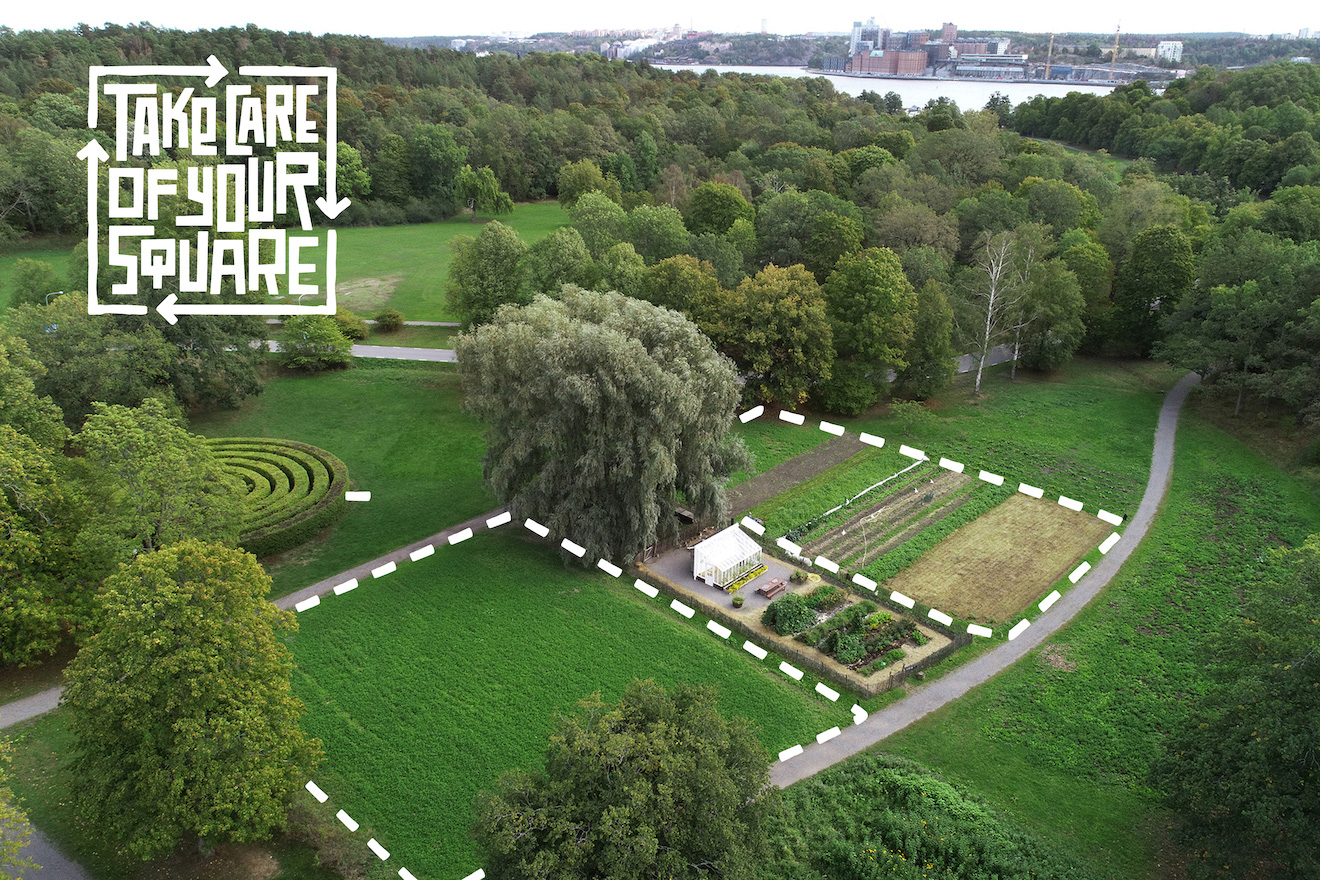
Congratulations to Rosendal’s Garden for being nominated for the ‘Änglamark’ prize for their project ‘Experiment 2000m2’! The project brings their scientific and practical knowledge to the forefront and illustrates their incredible commitment and innovative ideas. 

About ‘Änglamarkspriset’

The ‘Änglamarks’ prize was established in 2002 by the Coop. The aim of the prize is to encourage and highlight good environmental and ecological initiatives, and it is awarded to those people or organisations who demonstrate the importance and joy in eating sustainably and make valuable environmental and ecological contributions here in Sweden.

Vote!

Vote for Experiment 2000m2 here! Or any of the other well-deserved nominees.

Experiment 2000m2

Experiment 2000m2 takes on the incredibly difficult but exciting challenge of cultivating a good and healthy food culture that also considers its impact on the planet and the Baltic Sea.

Rosendal’s Garden has been working with new ways of cooking and different types of plants for a year and a half now, all with the aim of minimising the environmental impact.

2000m2 is around about how much farmland we each have per year for our food supply, based on the land being divided between as many people as we believe to be on the planet.

At the moment, the average Swede’s food supply accounts for around twice as much as this. The aim of the 2000m2 experiment is to make it possible to produce high-quality, healthy and sustainable food for every person, using a space of 2000 square metres.

The project requires co-operation on a large scale, and researchers, chefs, farmers, artists, communication and trade representatives have all come together to work on the project.

Recent research suggests that it is possible to produce food in a sustainable way for the 9.5 billion people who are expected to be living on earth by 2050, but it requires a substantial overhaul of the food systems we have today.

Experiment 2000m2 is a concrete example of how climate-friendly food can reduce CO2 emissions by 85%. Together we can turn research on sustainable development into a reality.

Responsible consumption and productionExperiment 2000m2 promotes and sets an example in sustainable food production (12.1,2,8)


Climate actionExperiment 2000m2 demonstrates how climate-friendly food reduces CO2 emissions (13.2)


Life below waterExperiment 2000m2 reduces over-fertilisation of the Baltic Sea (14.1)


Life on landExperiment 2000m2 aims to protect ecosystems and promote biodiversity (15.5)


Partnerships for the goalsExperiment 2000m2 is a collaboration between a number of different parties across a variety of industries (17.17)


If you want to read more about our work with sustainability, visit sustainable.royaldjurgarden.se/en  

Download the Bzzt app and take an ‘elpodd’ to Djurgården

åk elpodd till Djurgården

You can now download the Bzzt app and take an ‘elpodd’ to Djurgården! Electric pods are three-wheeled pods that run entirely on environmentally friendly electricity.

We are working towards a car-free and fossil-free Djurgården, so we always recommend that you walk or cycle here if you can. However, sometimes a taxi is needed, so why not take an electric taxi? With the Bzzt app, you can be sure that the taxi that picks you up and takes you to Djurgården will be electric. The small pods only use 15% of the energy required for a standard taxi, and take up a third of the space (they fit two passengers).

FREE JOURNEY TO THE ROBOTS EXHIBITION AT TEKNISKA MUSEET 

During Robots’ opening week from 17th to 23rd July, any journeys booked via the Bzzt app to Tekniska museet will be free of charge! And don’t forget that you can pre-book your tickets to the exhibition here.


So, if you aren’t able to get here by foot or bike, make sure to check out the Bzzt map to see where it can take you – how about a trip to Rosendal’s Garden or Waldemarsudde?

Sustainable cities and communitiesDjurgården’s attractions recommend using electric transport to help reduce the city’s environmental impact (11.2)


If you want to read more about our work with sustainability, visit sustainable.royaldjurgarden.se

New Free Ferry to Djurgården

Free Ferry to Djurgården

A new ferry line to and from Djurgården has started. We at Djurgården believe that accessibility to Scandinavia’s most popular visitor destination needs to be improved and therefore seven of our attractions have come together to finance a ferry that goes between Nybroplan and Djurgården for a month during summer 2019.

From 28th June to 28th July, Stockholmers and visitors in the city will be able to take the free ferry route between Nybroplan and Allmänna Gränd at Djurgården four times per hour in both directions between 10:00 and 16:00. The ferry is free of charge, as the name suggests.

The accessibility to Djurgården needs to be improved. Stockholm is the island’s city and there is plenty of space for more boat traffic. Through our initiative, we want to draw attention to it and at the same time be able to offer our visitors a smooth and beautiful trip to Djurgården, says Camilla Zedendahl, CEO of the Royal Djurgården Society.

Over one million visitors will visit Gröna Lund, Pop House, Liljevalchs, the Vasa Museum and Skansen during the month of July. At the same time, as many visitors are expected to enjoy a walk, picnic or visit to any of the other attractions, museums or restaurants in Djurgården. During this period, the existing means of transport reach the capacity of Djurgården.

“We cooperate around sustainability and have a vision of a car-free Djurgården. Together, we advocate a lot of wise ways to get here. The problem is that they are not enough. The new ferry will be our contribution”, says Camilla Zedendahl. “Now we want to show that there is room for more transport options. And in a city like Stockholm, the waterways should be an obvious alternative”.

“This is a welcome addition for travel, human life and movement in Stockholm’s transport network. An addition that I am very happy to see become a reality, not least since we need more initiatives alongside the regular public transport. I would therefore like to extend my sincere thanks to all those who have contributed to making this happen, from the initial thought process to the running of the line today. We need more of these types of collaborations and elements in a growing Stockholm region”, says Kristoffer Tamsons, traffic region council and chair of SL.

“The free ferry to Djurgården” is run by M / S Djurgården 4 and M / S Djurgården 7 and is jointly financed by Gröna Lund, Pop House Sweden, Liljevalchs, Vasamuseet, Skansen, Strömma Sweden and the Royal Djurgården administration. The two ferries can carry up to 98 guests each, and will make 48 trips per day.

The Royal Djurgården Society strives for a long-term sustainable development of Djurgården. The free ferry also improves access to the Royal National City Park. As Scandinavia’s most-visited tourist destination, Djurgården is important for Stockholmers, tourists and the tourism industry as a whole.

Partnerships for the goalsThe free ferry is the result of a joint local venture (17.17)


Sustainable cities and communitiesThe free ferry is a safe, affordable, accessible and sustainable transport system (11.2)


If you want to read more about our work with sustainability, visit sustainable.royaldjurgarden.se/en

Djurgården’s first underwater clean-up!

At Djurgården, we are taking action against littering. On 15th June between 10am and 2pm, lots of us are taking part in an underwater clean-up dive in the water by Junibacken and the Vasa Museum. We are doing this to draw attention to the fact that so much of the rubbish that we carelessly throw away ends up in the Baltic Sea. Anyone is welcome to turn up and see the divers in action via a live stream.

Sustainability is at the heart of our work here at Djurgården. Through doing this underwater clean-up, we want to show where so much rubbish ends up: in the Baltic Sea. It’s a small step, but still an important part of our journey to reduce littering. And this is just the beginning: we want Djurgården to be at the forefront of innovation for a sustainable society.

Over 50 companies and organisations that operate at Djurgården, as well as the Royal Djurgården Society, are working together as part of a joint commitment to prevent littering, together with Håll Sverige Rent (‘Keep Sweden Clean’).

“Amongst other things, we have decided to reduce the use of plastic here at Djurgården and eventually phase out single-use plastic. We will increase the recycling of packaging and work with other organisations on innovative solutions to reduce litter”, says Camilla Zedendahl.


Underwater clean-up at Djurgården, 10:00, 15th June 

All of the rubbish found will of course be extracted from the water, and there will also be marine archaeologists from the Swedish Maritime and Transport Museums to hand, who will decide whether any of the rubbish can be put on display at the Museum of Wrecks, which will be a new museum at Djurgården. Marine archaeologists from the Baltic Sea Science Center will also be there to talk about the importance of the Baltic Sea.

Royal Djurgården is part of the world’s first National City Park, and its unique environment has been a big part of Stockholm for hundreds of years – for Stockholmers and visitors alike. Djurgården is part of the Baltic Sea, whose beaches and nature are covered with rubbish. Most of this rubbish is plastic, which is non-degradable. The main cause of littering is human behaviour; when we eat and drink on-the-go and don’t take responsibility for where our rubbish ends up.

If you want to read more about our work with sustainability, visit sustainable.royaldjurgarden.se/en  

Partnerships for the goalsDjurgården works with other organisations to combat litter (17.17)


Life below waterThrough underwater clean-ups, Djurgården reduces the number of pollutants in the Baltic Sea (14.1)


Photo: Oskar Kihlborg

New attraction opens at Djurgården: the Baltic Sea Science Center

We’re super excited to be welcoming a new attraction to Djurgården: the Baltic Sea Science Center!

Since 2015, Skansen and BalticSea2020 have been working together to protect the future of the Baltic Sea. They soon came up with the idea of having an information center that could host interactive exhibitions and give the public and school groups the opportunity to go ‘under the sea’ via giant aquariums and education centers with labs. The Science Center started being built in autumn 2016 and now they are almost at the finish line.

The Baltic Sea is a unique inland sea. The mixture of freshwater and salt water makes for a unique body of water that can’t be found anywhere else in the world. The freshwater from the main body of water mixes with the salt water from the Atlantic and creates a difficult environment that only certain plants and animals can survive in. The Baltic Sea is also a local environment for over 90 million people. Over time, problems with overfertilisation, intensive fish farming and environmental toxins have become increasingly serious, and information, political decisions and cooperation between organisations and the public are needed to reverse the trend. Together with a number of other organisations and initiatives that have been working on this for a long time, the Baltic Sea Science Center at Skansen is a piece of the puzzle.

The work carried out at the Baltic Sea Science Center has been designed in consultation with representatives from the Swedish University of Agricultural Sciences, Stockholm University and BalticSea2020. The cooperation of these groups guarantees that all the information on display will be based on facts, and that it will be updated as research develops. The team will be active even after the Center opens in April 2019, and will be responsible for external monitoring and working closely with the research community – other national and international stakeholders will also be involved. The aim is to create a world-class educational center, give visitors an insight into what is under the Baltic Sea and what we can do to solve it.

Admission to the Baltic Sea Science Center is included in your Skansen admission, and the Center will be partially open to the general public, with the classrooms and laboratories being saved for pre-booked school groups.

The Baltic Sea Science Center will open its doors on 12th April 2019.

If you want to read more about our work with sustainability, visit sustainable.royaldjurgarden.se/en

Genomförande och globalt partnerskapThe Baltic Sea Science Center belongs to a partnership that promotes the protection of the Baltic Sea (17.17)


hav och marina resurserThe Baltic Science Center promotes scientific knowledge and research that contributes to healthier seas (12.a)


hållbar konsumtion och produktionThe Baltic Science Center increases public awareness of sustainable lifestyles (12.8)

Electric taxis will have priority at Djurgården

Elbilstaxi prioriteras på Djurgården

About 15 million people visit Djurgården each year, which is more than the Great Wall of China. Therefore, it is important that everyone can get here in a sustainable way.

Now Royal Djurgården is entering into a collaboration with an association called Zero Zone, in order to increase the proportion of electric taxis on Djurgården.

The collaboration means that electric cars are prioritised for those visitors who choose a taxi as a means of getting here. When a taxi is ordered to one of Djurgården’s connected addresses, an electric car will be prioritised for that customer.

Welcome to Djurgården!

Sustainable cities and communitiesBy prioritising electric cars, this reduces the city’s environmental impact (11.6)


Partnerships for the goalsDjurgården has a partnership with Nollzon (17.17)


Climate actionElectric cars reduce CO2 emissions (13.2)


Music acts at Gröna Lund week 36-37

In the following two weeks there will be several amazing music acts at Gröna Lund, even though the summer draws closer to the end. On the 6th of September one of Sweden’s most mythical rock bands will back for a temporary visit when Gröna Lund welcomes Union Carbide Productions to the main stage. The band will reunite after a 25 years break.

On Friday you can experience Markus Krunegård and in the following week DANIEL ADAMS-RAY x HUMAN and Takida! The musical season at Gröna Lund continues until the 28th of September when Teddy Bears will be the closing act.


David Shrigley, presents new show at Spritmuseum this autumn!

höstens konstrunda på Djurgården

DAVID SHRIGLEY – EXHIBITION OF GIANT INFLATABLE SWAN-THINGS

One of Great Britain’s most renowned artists, David Shrigley, presents new show at Spritmuseum in Sweden this autumn. His Exhibition of Giant Inflatable Swan-things will be an installation created exclusively for the museum gallery, opening on 27 September. Nothing is quite as it seems in Shrigley’s universe. The laws of physics are suspended and the everyday world is distorted, revealing a rare and mordant sense of humour. Welcome down the rabbit-hole!

“We have been eager to host an exhibition by David ever since Spritmuseum opened in 2012,” says Mia Sundberg, curator of the museum’s collection. “I’m especially pleased that we are presenting a new three-dimensional installation. We don’t want to reveal too much, but the title of the show provides a pretty good hint.”

Simple pen and ink drawings with handwritten slogans and puns and a visual idiom reminiscent of comic books and caricatures form the foundation of David Shrigley’s art. He also works in sculpture, large installations, animation, painting, photography and music. With conceptual obstinacy and a satirical undertone, Shrigley addresses themes that mirror everyday life and the ordinary elements of human behaviour, from shopping lists to snippets of overheard conversations. It is inexplicably, madly funny.

The exhibition will take place between 27 September to 31 March 2019.

For more information about David Shrigley´s exhibition at Spritmuseum click here!

Royal Djurgården welcome Europride to Stockholm

Royal Djurgården is proud to welcome Europride to Stockholm

Royal Djurgården is proud to welcome Europride to Stockholm

Royal Djurgården – in the heart of Stockholm, plays an important part in the life of almost every Stockholmer. And Pride has become an important part of life at Djurgården. This year is no exception. On the contrary. We want to celebrate the fact that Europride is in Stockholm by some special treats. Run for Pride, craft-shops for the kids, ABBA-singing and dancing at a special discount, guided tours, theatre, fine art, good food. Everything is here for you to enjoy.

But let us start from the beginning.

Royal Djurgården is not only in the heart of the city, it also has a special place in the heart of Stockholmers. The island has been the place for recreation and fun for centuries. In the 15th century, the land was dedicated for royalties to hunt gain, and the famous Queen Christina even had lions here! Later, Djurgården became the place of entertainment for both royalties and commoners with lots of inns, and other forms of amusements such as theatre, music, and dancing.

In the 1850’s, the amusement park Gröna Lund opened its gates, and not long after both Cirkus and the outdoor museum Skansen was opened. The island is still a place for old traditions – with the celebrations of New Year’s Eve and Sweden’s National Day at Skansen, but it’s also the place for new ideas and inventions at for example the Museum of Science and Technology. And Royal Djurgården is the home of new traditions, such as hosting the yearly QX Gaygala.

Today, Djurgården is still a place for both recreation and fun.

You can come here to enjoy the tranquillity of the park, the old oaks, and the sound of the waves hitting the pebbled beaches, or you can visit the many museums, the amusement park, or have a fun night out at a restaurant. This is the place where you’ll see and experience what Stockholm really is, a place with lots of warmth, openness, and friendliness. A place where you can be who you are. In the park, at a museum, in a restaurant, in an art gallery. In the middle of tranquillity, but also in the middle of a pulsating city.

This is Royal Djurgården – Scandinavia’s # 1 attraction.

And Royal Djurgården is proud to welcome Europride to Stockholm!

Our best to-do-tips durin the week of Europride Stockholm

Read about some our best tips on what to do when you visit Royal Djurgården during Europride below.

Royal Walks – New app for Royal Djurgården

The Royal Walks app guides you along a scenic stroll through Djurgården, from Djurgården Bridge and along the waterfront to the Royal summer palace, Rosendal.

The route takes in sculptures, buildings, historical sites and events.

The Bernadotte Walk tells of the significance of the Bernadotte dynasty for Royal Djurgården – all of the seven Bernadotte kings have links to the area. Find out about the king who constructed Rosendal Palace and its surrounding parkland, the king who celebrated his silver jubilee with a world exhibition, and the king who inaugurated the world’s first National City Park.

The Waterfront Walk stretches from Djurgården Bridge along the shore in the direction of Rosendal. Along the way we pass the “Swedish Nightingale”, and learn about the people and events that gave Jägarbackarna and Villa Godthem their names.

The app also allows you to create your own walks to suit your interests, with the categories Garden and nature, Buildings and constructions, Royal, Places and events and Sculptures.

‘Royal Walks’ can be downloaded free from and The App Store  and Google play. The app offers complete walks following a theme or category. Texts are in Swedish and English and are illustrated with historical and more recent images.

For more information about the Royal Walks app click here

Open Letter: Give Djurgården all-electric public transport

Öppet brev till Trafiknämnden

Today, the members of the Transport Committee at Stockholm County Council received an open letter asking for all-electric public transport at Djurgården. Royal Djurgården and Fossil-free Sweden are the main drivers, and have put forward a demand to look into the possibility of electric ferries, as well as how the ferry port at Slussen can be made into an important symbol of a sustainable city.

28th June 2018 – Open letter to the Transport Committee at Stockholm County Council

Revamp the Djurgården Ferry and give Royal Djurgården all-electric public transport.

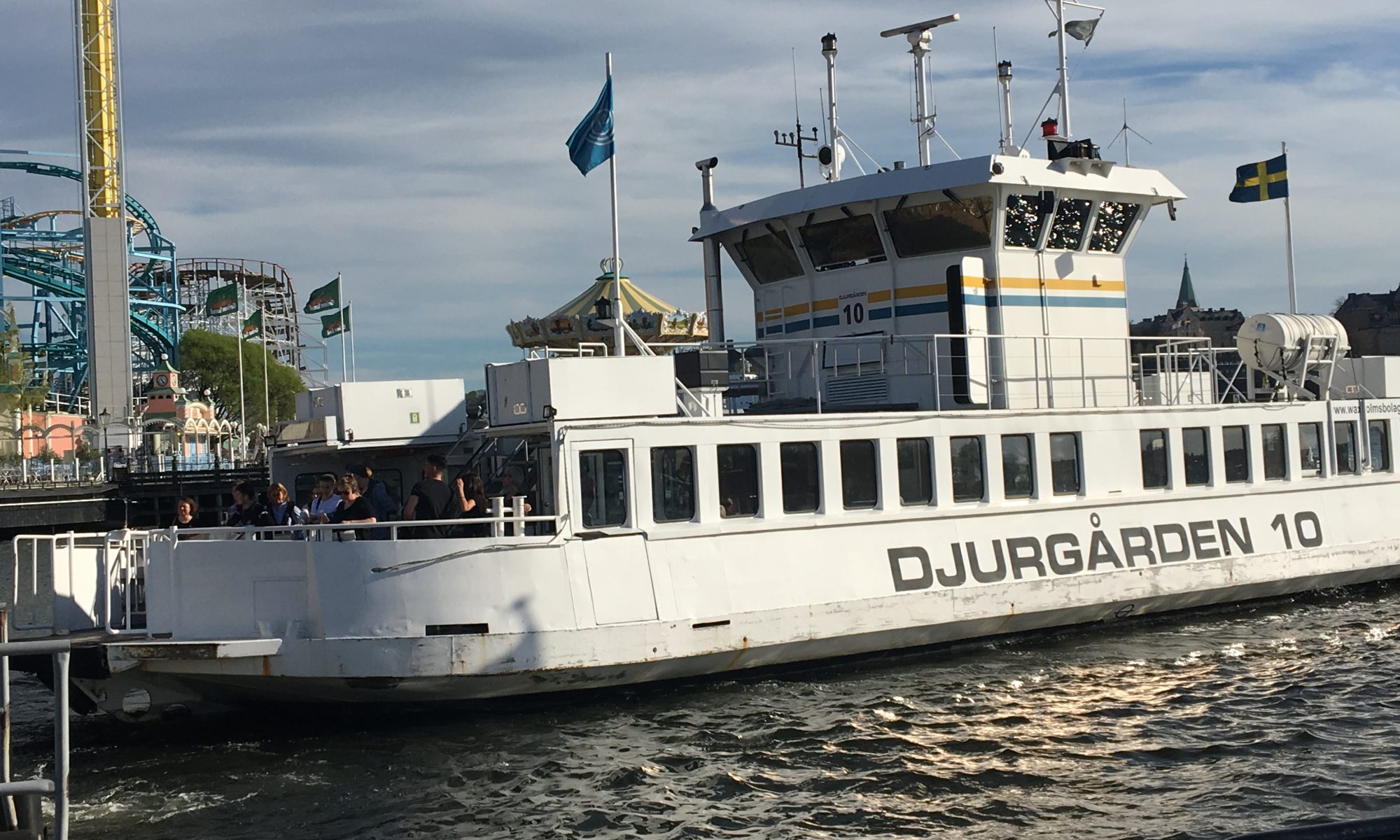
After the summer, there will be a direct tram line between Djurgården and Stockholm city centre. With this, Scandinavia’s #1 attraction, which draws 15 million visitors per year – more than the Great Wall of China and Disneyland Paris – will have a high-capacity, accessible and environmentally-friendly public transport link. We want to give the Djurgården Ferry a boost, too, and in the long run give Djurgården all-electric public transport.

Improvements to the Djurgården ferries are starting to take shape; they now have better accessibility and more modern and environmentally-friendly features. With the new ferry port being built at Slussen, it is of the utmost importance that the ferry route is built with long-term sustainability in mind.

With its unique combination of culture and entertainment, parks and nature, Djurgården can be a leading example for a sustainable Stockholm and a fossil-free Sweden. An important step, therefore, is to make public transport fossil-free and the ferries all-electric.

The Djurgården Ferry turned 120 years old last year, and is probably Sweden’s most famous ferry route – it already takes close to three million passengers to and from Djurgården today. All of the prerequisites for investing in electric ferries are in place; now all we need is a positive decision!

If Sweden is to reach its goal of reducing greenhouse gas emissions from domestic transport by 70% by 2030, we need to use our scarce resources as best we can. The battle for biofuels will increase once lorries, planes, boats etc. begin switching to new fuels. Therefore, it is important that electrical energy is used where possible, and especially in areas and on routes where it can have a real impact.

On ferry routes that are shorter and have a set route, such as the Djurgården Ferry, it is easy to adjust the battery size and charging time. This would have a positive effect on the climate, but also in the local area, as it would reduce emissions and noise levels. Since 2014, electric ferries have been trialled on two routes: between Nybroplan and Kvarnholmen and between Solna Strand and Riddarholmen. The latter has reduced carbon dioxide emissions by 300 tonnes per year and cut operating costs by 40%.

Therefore, we are asking the council to look into electric ferries for Djurgården, as well as how the ferry port at Slussen can become an important symbol for a sustainable city.

Djurgården is Scandinavia’s #1 attraction, which draws 15 million visitors per year – more than the Great Wall of China and Disneyland Paris, for example. The Royal Djurgården Society works with Djurgården’s attractions to reach common goals and preserve and develop Djurgården’s unique features.

Sustainability is at the heart of what we do and a key part of managing visitor numbers. At Djurgården, it is possible for the island’s rich history and modern, environmentally-friendly technological advances to coincide. We want to promote and showcase the ideas that will make Sweden one of the world’s first fossil-free countries, as we did at the Stockholm World Fairs that took place at Djurgården in 1897 and 1930.

Djurgården’s attractions are already in the process of reducing their use of fossil fuels; Skansen’s horse manure is used by Rosendal’s Garden in their biodynamic farming, for example. We welcomed the extension of the tramline from Djurgården to Stockholm’s central station, as well as the county council’s decision to look into the transition to electric buses.

We now have an historic opportunity to take another step towards a more sustainable Stockholm and Djurgården. We urge the county council to seize this unique opportunity to make Djurgården’s public transport all-electric and ensure that the world’s first National City Park is a leading example in sustainable transport.

If you want to read more about our work with sustainability, visit sustainable.royaldjurgarden.se/en

John Brattmyr

Skansen CEO, Chairman for the Royal Djurgården Society

Camilla Zedendahl

Royal Djurgården Society CEO

Svante Axelsson

National coordinator for Fossil-free Sweden

Partnerships for the goals

Royal Djurgården works with other organisations to bring electric public transport to Djurgården (17.17)


Climate actionRoyal Djurgården takes a leading role in reducing CO2 emissions from public transport (13.2)


Sustainable cities and communities

Royal Djurgården works with others to reduce the city’s environmental impact (11.6)


Industry, innovation and infrastructure

Royal Djurgården works with others to build a sustainable infrastructure (9.4)

Liljevalchs welcomes you to the world of Lars Lerin

Welcome to Lars Lerin’s pictorial world, created from water and pigment. This summer of 2018, Liljevalchs will display hundreds of paintings from Lerin’s 2002–2018 period. The rugged landscape of Lofoten or the ruins of Syria, a pillar-like birch forest or lines of files on archive shelves – Lerin reincarnates powerful visual impressions via his inimitable technique.

In recent years Lars Lerin has cemented his position as one of Sweden’s most loved artists. People queue for hours to see his exhibitions and the television and radio programmes he participates in attract millions of viewers. We feel that we know him; his openness gives voice to our own shyness.

Lerin, however, is not only a very popular and folksy guy from Värmland, he is a passionate, obsessed and serious artist. Widely regarded as the premier watercolourist of the Nordic region, he also works with graphic art and photography as well as text.

“Lars Lerin’s watercolours and Liljevalchs’ beautiful galleries are the perfect combination. The importance and greatness of his art will be supremely evident to all and sundry, were it not so already. It’s as if Lerin has come home,” an emotional Mårten Castenfors, Director of Liljevalchs, explains.

Lars Lerin was born in 1954 in Munkfors, Värmland where he grew up. He received his artistic training at Valand Academy in Gothenburg. Currently he lives in Hammarö, outside Karlstad. Karlstad is also the location of the museum Sandgrund Lars Lerin, inaugurated in 2012, which houses a permanent exhibition of his works.

In addition to holding exhibitions at galleries and museums in Sweden, the Nordic countries, France, Germany and the United States, Lars Lerin has published some 30 books in which he speaks of meetings and environments from his many travels and of life at home.

“Lars Lerin is a thematician. It is easy to follow his biographical journey through his motifs: Värmland, Lofoten, Egypt and Syria,” Mårten Castenfors writes in the extensive foreword to the exhibition catalogue.“The exhibition at Liljevalchs is an attempt to concentrate on that which testifies to his passion. What we have looked for is his obsessiveness, which, noticeably often, finds its form in mellow moods, which, however, should not be personified. Lerin may paint darkly but when he paints he is not sad, but rather happy.”

The catalogue boasts reproductions of over 200 paintings and sketches, in addition to Mattias Lindbäck’s richly detailed photographic portraits from the artist’s studio.

Captivated by Lars Lerin’s pictorial world, this year’s Tranströmer Prize winner, poet Eva Runefelt contributes 22 newly written poems to the exhibition catalogue, to be enjoyed independently or in dialogue with the paintings.

“Eva Runefelt is a poet who embodies the written word, who is in language, or rather, who is language, in the same way Lerin is in his material. They are so different, but so alike in their obsession and responsive search for the exact formulation, in words or in images,” Mårten Castenfors concludes.

Opening hours during the exhibition period: Monday–Thursday 10.00–18.00, Friday-Sunday 11.00–17.00. Entrance fee: SEK 80, free entry for under 18s. Free entry for all on Mondays.

Photo: Mattias Lindbäck

Stockholm Marathon 2018: Traffic Information

Stockholm Marathon 2018: Traffic Information

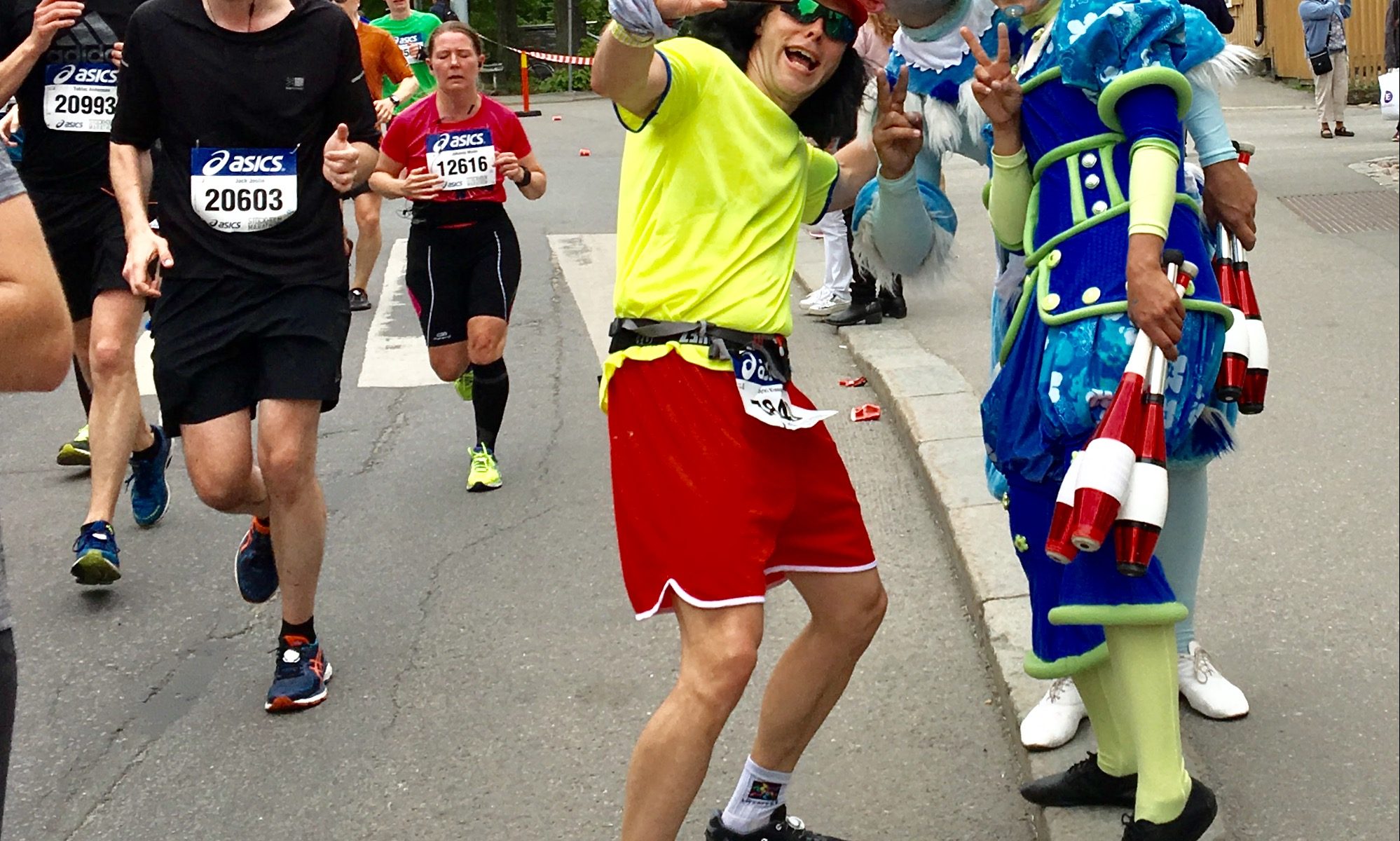
June 2nd Stockholm Marathon runs through Stockholm. The best place to see the race is off course at Djurgården, where there is lot´s going on.  It is a great day for Stockholm, but it is a day that effects traffic. So here are some tips om how to get around in Stockholm during Stockholm Marathon 2018: Traffic Information

During Stockholm Marathon, traffic is re-routed, as the runners take over the streets. This means you have to find other ways than by car, bus or tram to get around.

Stockholm Marathon 2018: Traffic Information

Here are some tips on how to get to Djurgården during Stockholm Marathon.

The waterways are free during Stockholm Marathon

Djurgårdsfärjan runs extra traffic on June 2 – every 7 minute between 11.00 and 19.00, between Slussen – Allmänna Gränd/Djurgården – Skeppsholmen.

Ferry line 80 – Sjövägen, takes you between Nybroplan – Saltsjöqvarn – Finnboda harbor – Kvarnholmen – Blockhusudden – Nacka beach – Blockhusudden – Lidingö / Dalénum – Frihamnen – Allmänna Gränd/Djurgården. Timetable: Linje 80 Sjövägen Vår 18.

M/S Emelie takes you between Hammarby Sjöstad – Masthamnen – Djurgården – Nybroplan according to this timetable: Tidtabell Emelie 70×100 VÅR 2018 NY tabell.

We also recommend Hop-on Hop-off boat that takes you around Stockholm on the water according to the following timetable. New this summer is a stop at the Art museum Waldemarsudde.

Travel under ground during Stockholm Marathon

Why not take the Subway to Karlaplan or Östermalmstorg and then walk the last bit to Djurgården and the Museum Park.

Buses, trams – public transportation canceled Stockholm Marathon

On June 2nd it is not possible to drive to Djurgården or the Museum Park. Trams and bus services to Djurgården and the Museum Park are affected greatly during Stockholm Marathon. The trams to Djurgården will be canceled approx. 11.00 – 17.30 (possibly longer). As far as bus lines 69 and 76 are concerned, traffic is cancelled from kl. 11.00 to 18.30.

If you want to know more about traffic in Stockholm on June 2nd search the SL app.

Stockholm Marathon passes through Djurgården

The runners are expected to run through Djurgården from 1 PM to 3.30 PM (or later, due to the hot weather).

The runners are expected to pass by the Museum Park from 12.50 PM to 3 PM (or later, due to the hot weather).

ABBA – What happened afterwards

ABBA – vad hände sen? 

The most common question asked at ABBA The Museum over the years is: ABBA – What happened afterwards? What happened when the members of ABBA went their different ways? Now, they are telling the the whole story as ABBA The Museum has expanded.

Thirty-six years have passed since Sweden’s most successful musical export stopped performing together, but their songs are being played today more than ever. Five years after the opening of the museum, comes a completely new exhibition about the group’s members at ABBA The Museum in Stockholm, Sweden – an exhibition depicting everything that happened after their years in ABBA. Visitors are taken on a journey through the decades of music focusing on Anni- Frid, Björn, Benny and Agnetha. The exhibition opens to the public on 8 May 2018.

–  Anything can happen – and has happened – when creativity is allowed to flow. The new exhibition will be full of gems, says Anni-Frid Lyngstad.

– Because we pushed our creativity in so many directions after the ABBA years, I think the new exhibition is like a wonderful amusement park. And the most fantastic thing of all is that the journey never ends. We are on our way into a new, exciting adventure, there is more to come!, says Björn Ulvaeus.

– We never really bade farewell to one another. We wanted to try new things, and the time never seemed right for a reunion. Yet the music has, of course, never left me. Much of what we achieved during the years after ABBA is now presented in the exhibition, says Benny Andersson.

– The ABBA story did not end in 1982. One thing led to another, and the journey continued. We now see that in this exhibition, says Agnetha Fältskog.

Djurgården’s new collaboration has sustainability at the forefront

Djurgården samarbetar med Agenda 2030 delegationen och Fossilfritt Sverige

Here at Djurgården, we want to be involved in solving today’s challenges. At our attractions and through our activities and exhibitions, we inspire and educate millions of visitors every year. In furthering our sustainability work, we aim to strengthen all the work that everyone here at Royal Djurgården already does. However, we need to think beyond just our own actions; we need to work with each other. And that begins with our exciting new collaboration with Agenda 2030 and Fossil-free Sweden, which we hope will challenge us to take new and bigger steps forward.

ACTING MORE SUSTAINABLY

Our sustainability work has taken place in several stages. The first step was to analyse what we’d done so far and what we were currently doing, to see what we could do to act even more sustainably. With this as a base, we are now looking at our next steps.

WORKING TOGETHER

The next step we are taking is to improve how we work together. Through working together and sharing our knowledge with one another, we are inspiring each other to strengthen our sustainability work and contribute to a positive social development. Our ambition is to act in such a way that we can also inspire others around us to think and act sustainably. We have put together a core team who will work together to develop strategies and then present them to our stakeholders.

WORKING WITH OTHER ORGANISATIONS: DJURGÅRDEN WILL BE WORKING WITH AGENDA 2030 AND FOSSIL-FREE SWEDEN

We know that we aren’t alone in the world. If we are to succeed in our sustainability work, we need to join together with other organisations and find new ways to do things better. And why not start by working with the best?

It’s amazing that we’ve given the opportunity to work with Agenda 2030 and Fossil-free Sweden. Through these collaborations, we will have access to new inspiration and expertise.

WE WANT TO LEAD THE DEVELOPMENT

Our ultimate goal is to lead the development. Sustainability is a key part of our identity, and we want it to be something that draws people to Stockholm, Sweden and Scandinavia’s biggest attraction. We want to be a role model for others and be at the forefront – and that work starts now.

Our target is 2021. So it’s time to roll up our sleeves and get started.

If you want to read more about our work with sustainability, visit sustainable.royaldjurgarden.se/en/home-en

Partnerships for the goals

Royal Djurgården works with other organisations to build a sustainable society (17.17)

Climate actionRoyal Djurgården has a target of a fossil-free Djurgården (13.2)


Sustainable cities and communitiesRoyal Djurgården’s sustainability work contributes towards a sustainable Stockholm (11.4)

We are joining the Stockholm LGBT network!

Stockholm LGBT

We’re super excited to have joined Stockholm LGBT’s network!

Several of our attractions at Royal Djurgården, such as ABBA The Museum, Pop House and the Vasa Museum have already joined – as we all should, right?!

We’ll be sending over information about Djurgården and everything we have to offer, and we’ll also be featured on the Stockholm LGBT website, which means we have yet another platform for reaching out to our visitors.

What is Stockholm LGBT?

Stockholm LGBT works to uphold Stockholm’s reputation as one of the world’s most open, diverse and inclusive cities. The target group is the whole rainbow family and we see our collaboration with them as an extra investment in a target group that is important to us – everyone is welcome here.

EuroPride 2018

This year, Europride took place right here in Stockholm from 27th July to 5th August, so the world had its eyes on us. We started Pride Week by proudly hosting Sweden’s first and only Run for Pride race, right here at Djurgården! This was the second time we had hosted the event. We also arranged a festival filled with music, art exhibitions, talks, theatre, screenings and arts and crafts.

We are already looking forward to hosting future Pride events here at Royal Djurgården – Scandinavia’s number one attraction.

If you want to read more about our work with sustainability, visit sustainable.royaldjurgarden.se/en

Reduced inequalitiesRoyal Djurgården empowers and promotes the social, economic and political inclusion of all, irrespective of age, sex, disability, race, ethnicity, origin, religion or economic or other status (10.2)

Peace, justice and strong institutionsRoyal Djurgården promotes and includes everyone (16.7)


Partnerships for the goalsRoyal Djurgården works with other organisations to build a sustainable society (17.17)