Christmas is probably the second most important celebration in the Swedish calendar after Midsummer. It won’t surprise you that Swedes hold many Christmas traditions – some slightly more peculiar than others – close to their heart, and you can come and experience many of them right here at Royal Djurgården.
The build-up to Christmas usually starts around mid-November, although you’ll see bottles of the infamous Swedish Julmust creeping into the supermarkets around the beginning of October (I feel like if I suggest that Julmust is a bit like coke then many Swedes will be horrified. So let’s just say that it’s a Christmas soft drink). Once the decorations go up, they’re usually just as minimalistic and sophisticated as you would expect any Scandinavian design to be.
Christmas celebrations really kick off on the first of Advent, which is the Sunday four weeks before Christmas. On this day, people light the first candle in the Advent candlestick, and then every Sunday until Christmas the next candle is also lit (and blown out after a while), until all four candles are alight. This is always a special event as it means that Christmas is really on its way.

Advent also sees the introduction of two of Sweden’s most beloved treats: pepparkakor (ginger biscuits) and lussekatter (saffron buns). Pepparkakor are not – I repeat not – gingerbread; instead they are thin ginger biscuits – a ginger snap if you will. You can either buy ready-made dough from the likes of Rosendal’s Garden, or make your own and create your biscuits using biscuit cutters shaped like stars, snowflakes, hearts etc. Some Swedes do then ice them afterwards – often using white icing.

Lussekatter are traditionally baked to celebrate St. Lucia Day on 13th December, but you’ll spot these saffron swirls of goodness in bakeries even before the first of Advent comes around. They are a sort-of sweet, sort-of savoury bun (obviously, Swedes love buns) typically shaped into an ‘s’ to look like a curled-up cat, with raisins for decoration to resemble the cat’s eyes.
Both of these are usually enjoyed together with glögg, a hot, spicy drink (no, it is NOT mulled wine) topped with blanched almonds and raisins (optional). You will likely find all three in almost all of our restaurants and cafés at Christmas time. At Hotel Hasselbacken you can enjoy a glass of glögg in their beautiful lobby every afternoon between 26th November and Christmas Day.

Speaking of Lucia, this is an extremely special celebration in Sweden. It’s known as the festival of light, and it’s filled with candles, carols and joy. The 13th December is traditionally the darkest night and the darkest morning, so the candlelight is meant to fend off the darkness and dark spirits. The main event is the Lucia procession, where girls and boys or women and men wear white robes and red sashes and hold candles and follow Lucia. The women also often wear garlands and the men white pointy hats. Lucia wears a candle crown, and together they sing Swedish hymns and Christmas carols. The Lucia celebrations take place in churches, town halls or even outside in the town or city’s main square. Pepparkakor, lussekatter and glögg also feature.
So what about the Christmas celebration (Julafton) itself? Well, for starters, the main celebration in Sweden is actually on the 24th (I know, shock horror). As with every other Swedish holiday celebration, it features schnapps, silly songs, good food and (hopefully) good company. It also involves watching the same Donald Duck (Kalle Anka) episode from the seventies at 3pm (no exceptions).

And of course, we need to talk about the food. The Swedish Christmas dinner is buffet-style (julbord), and again, like all other Swedish holidays, features boiled potatoes, salmon, meatballs, dill and several types of herring. It also makes way for two Christmas specials: the julskinka (Christmas ham – usually the centrepiece, served cold with a mustard and breadcrumb crust) and Janssons Frestelse (a potato gratin with onions and anchovies). Many restaurants start hosting their Julbord events from about mid-November, and here at Royal Djurgården you have plenty to choose from, including Junibacken, Oaxen Slip and Villa Källhagen.
This Christmas will of course be slightly different to normal, but if you’re visiting Royal Djurgården in the build-up to Christmas or even on Christmas itself, we hope you will experience and enjoy some of Sweden’s Christmas traditions. God Jul!
 And if fashion’s your thing, you mustn’t miss the gallery’s latest exhibition:
 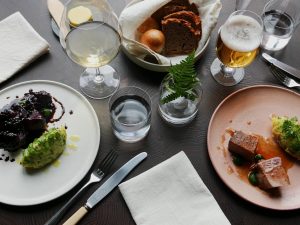 When it comes to lunch, there are so many options here at Royal Djurgården. Many of our
  You’ll be spoilt for choice when it comes to deciding on an afternoon activity! If you’d like to explore more of the island’s greenery, you can hire a bike from Sjöcaféet. Or if it’s a boat tour you’re after,



 The conversion of the M/S Sylvia to an all-electric boat contributes to reducing Stockholm’s noise emissions (11.2,6)
 The conversion of the M/S Sylvia to an all-electric boat helps to reduce CO2 emissions (13.2)
 Djurgården’s attractions are working with international organisations to build the transport of the future (17.17)
 Take a long walk and aim for Folke Bernadotte’s bridge. It’s an easy way to get from Museiparken/The Museum Park on the north side of Djurgårdsbrunnskanalen to Rosendal on the south side.
 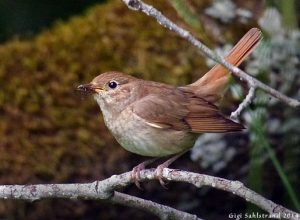 Djurgården has a rich wildlife. There are over 800 types of flowering plants, 1200 species of beetle and 100 bird species in the Royal National City Park. There are also both well-known animals such as deer, foxes, hares and toads, and more unusual species to be found. Here are some more
  With the free app ‘Royal walks’, you can follow informative walks on historical and royal grounds at Djurgården. There are four routes to follow – Djurgården Buildings, Waterline Walk, Bernadotte Walk and Djurgården Art Walk. Download the app from the App Store or Google Play, put on your crown and go for a walk!


 CIRKUS & POP HOUSE
 Djurgården’s attractions mark and celebrate Stockholm Pride (10.2,)

 3. Celebrate 75 years of the world’s strongest girl at Junibacken
 6. Soak up the sun with some al fresco dining

 Through underwater clean-ups, Djurgården reduces the number of pollutants in the Baltic Sea (14.1)


 1. The Royal National Park is the world’s first National City Park.
 Djurgården has a been paradise for recreation and entertainment for hundreds of years. Back then there was entertainment for both royals and ‘ordinary people’ (who usually frequented the local taverns and inns). Fast forward to today and Djurgården remains a favourite place for many Stockholmers.


 Oaxen received an award for its sustainable food production (12.2,3,5)